Magic Milk Mug Repair
I recently got a new aohi mug that I found on Facebook Marketplace. It’s the artist line, and even though it’s not the green color that I wanted, it’s still a beautiful cup. I didn’t necessarily need a new cup, but considering that just the pad is more expensive than the entire set that I found off facebook (i had broken my old one) I figured it was time for an upgrade anyway.
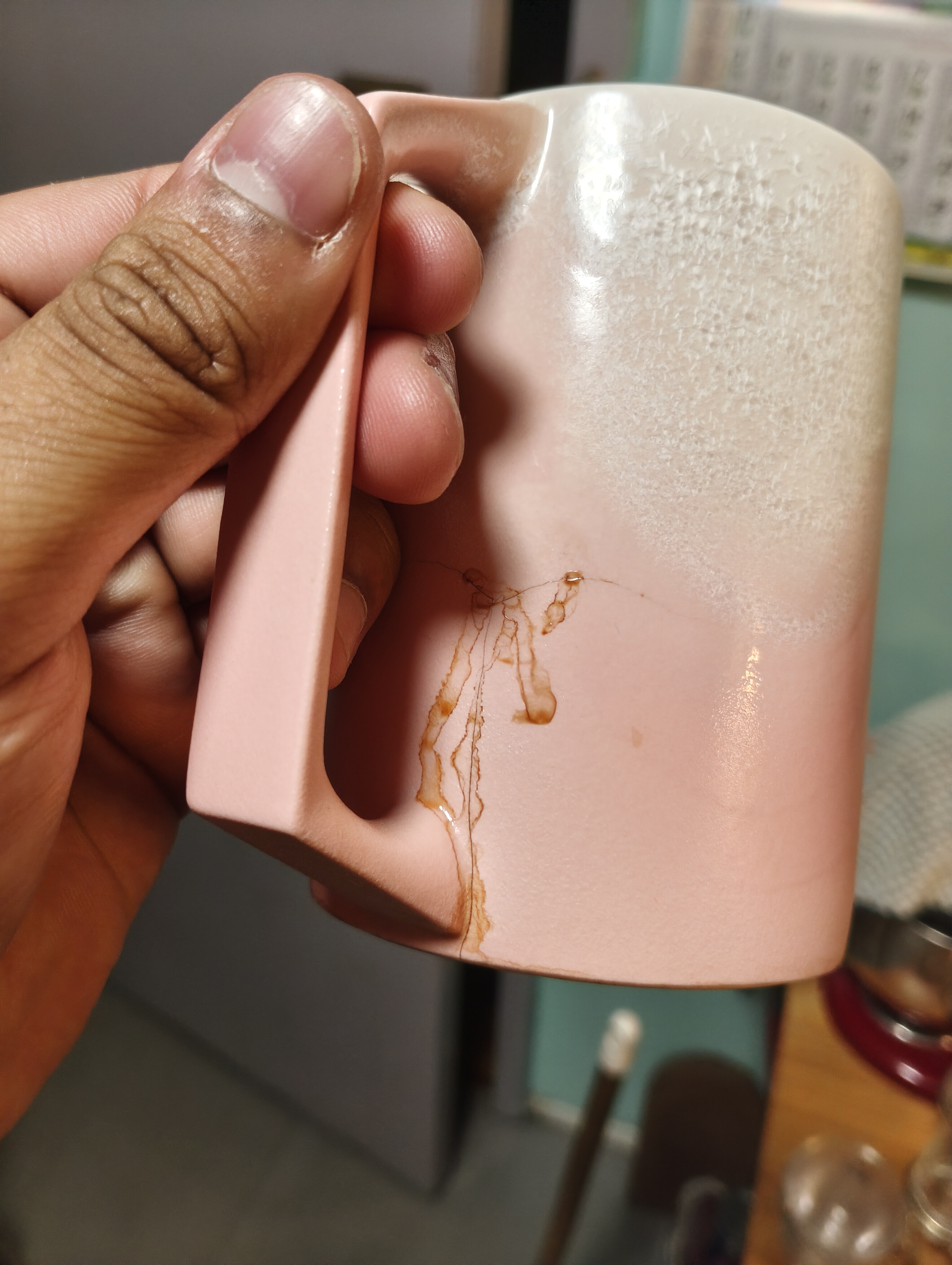
I bring it back home, and since it was late at night there was no time for tea or coffee, and wanted to see how much power the new pad could take (i had the gen 1, this is the gen 3). So i left it there with no liquid in there, and within a minute there was a loud crack. I quickly took it off, inspected it, and figured it was fine. I had done this with my old cup all the time, let it sit with no liquid in there, heating up, just to dry off some of the liquid that was still there, so I was surprised that this had happened.
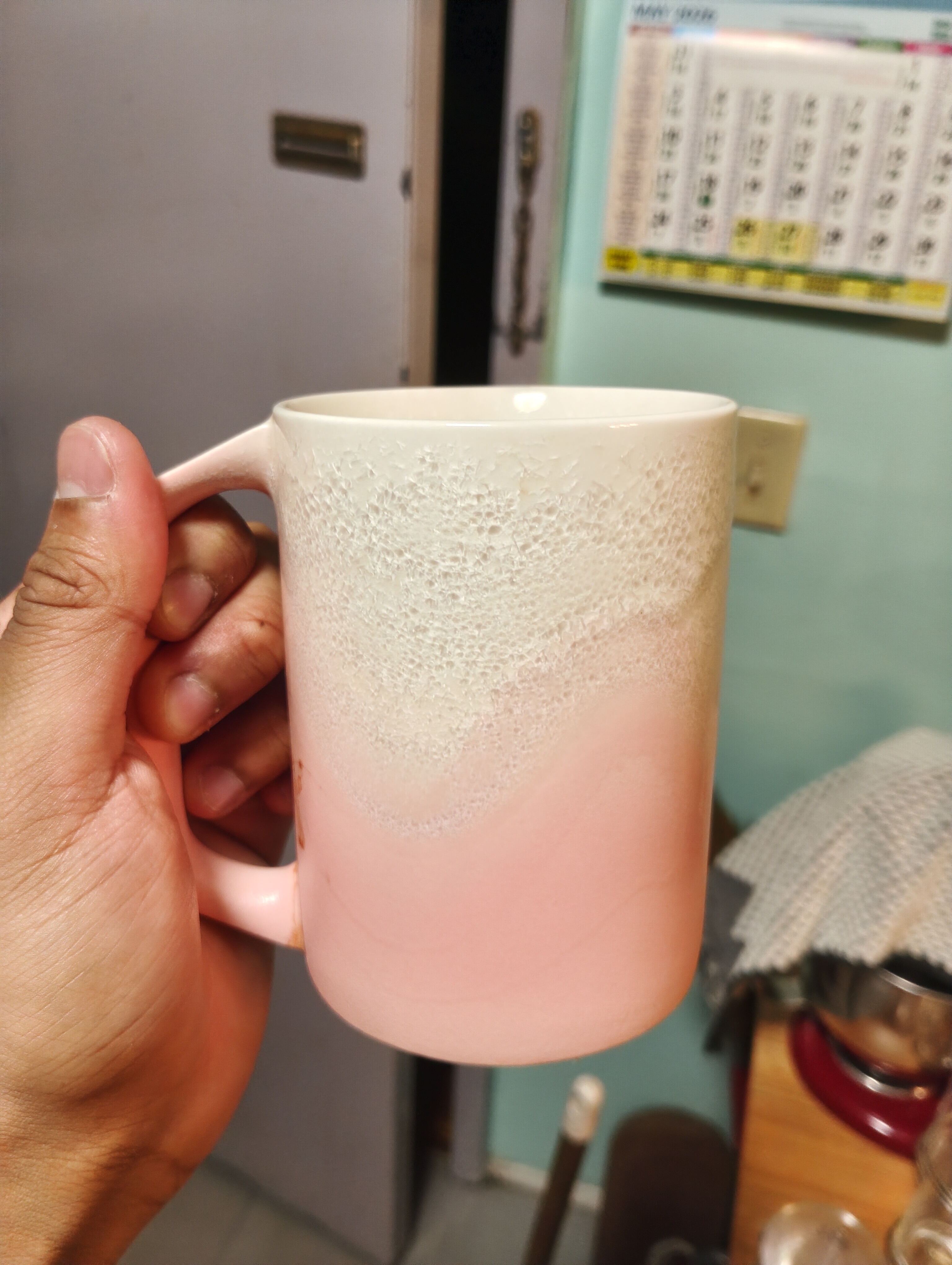
Well a few teas later, it was clear that it was leaking. I immediately thought to glue it back together, but went to google anyway just to see if there was a better alternative I wasn’t thinking about. And there was : milk. Apparently, boiling milk in ceramics will hold it together and be resistant to washes. There’s a lot on the internet about this, but the reasons for it seem suspect at best. The casein in the mlik adhered to ceramic and fixed it? No way that’s the case! Otherwise, everytime you have a dairy beverage in any ceramic you’d have a small layer that you’d never be able to clean! I know that the outside is glazed, but surely there would be some parts of it that would be permanently bonded, right? Like the bottom of the cup that’s gritty from no glaze – anytime mlik runs down the side you’d have a spot that would me molecularly bonded and impossible to clean? I just don’t believe that.
And I proved myself (kinda) right just a few hours later. I figured that this hairline crack wasn’t going to stop me from drinking my tea, and I just put a small paper towel under it to catch the drippings. Interestingly though, after 3 teas, the leaking stopped! Upon closer inspection the tea had formed a barrier in the crack – whatever dried tea particulate had clogged the crack! And even after washing and putting just water in there (maybe the tea was too saturated to dissolve the tea that was in the crack) it still wasn’t leaking!
So surely it’s not the protein in the milk! I wish there was definitive proof of what this was. I remember there being an Adam Ragusea quote that says :
What food scientists like y’all tend to investigate is stuff of interest to the food industry, right? Large scale commercial food processing and manufacturing, or you tend to investigate questions of interest to governments and foundations and other grant makers who want to fund important science studies with major implications for public health or food security or something like that. So much of the stuff that I wonder about as a home cook is in the donut hole, which is between those two extremes.
And so I often have to investigate questions myself like I wanted to know if bronze dye extruded pasta really delivers more sauce to your mouth compared to pasta that’s extruded out of a Teflon coated dye, which is much smoother and therefore has less surface areas. So people say less sauce sticks to it or absorbs through it or something.
I figured that that bit of pasta folk wisdom might be addressed in the scientific literature. I found one paper repeating the claim that bronze dye pasta retains more sauce, but it wasn’t an original observation. They cited that claim to somebody else. They were attributing it to another paper that I went and chased down.
And in the second paper that I found the primary source, I discovered the origin of the claim in the literature that bronze dye pasta absorbs more sauce than Teflon dye pasta. The origin of that claim is folk wisdom. Some consumers report that bronze dye pasta retains more sauce is basically what they said in the primary source. Folks are saying [that] was the source.
Pretty much sums up my experience with the ceramic milk theory. The donut hole that he talks about is a bit of a sore spot for me – I think very often about how scientific progress is unfairly tied to funding and how here in America we have pretty much abandoned the donut hole on the side of the road because of DOGE and the idiots at the… I’m getting sidetracked. Just an interesting rabbit hole I went down today.